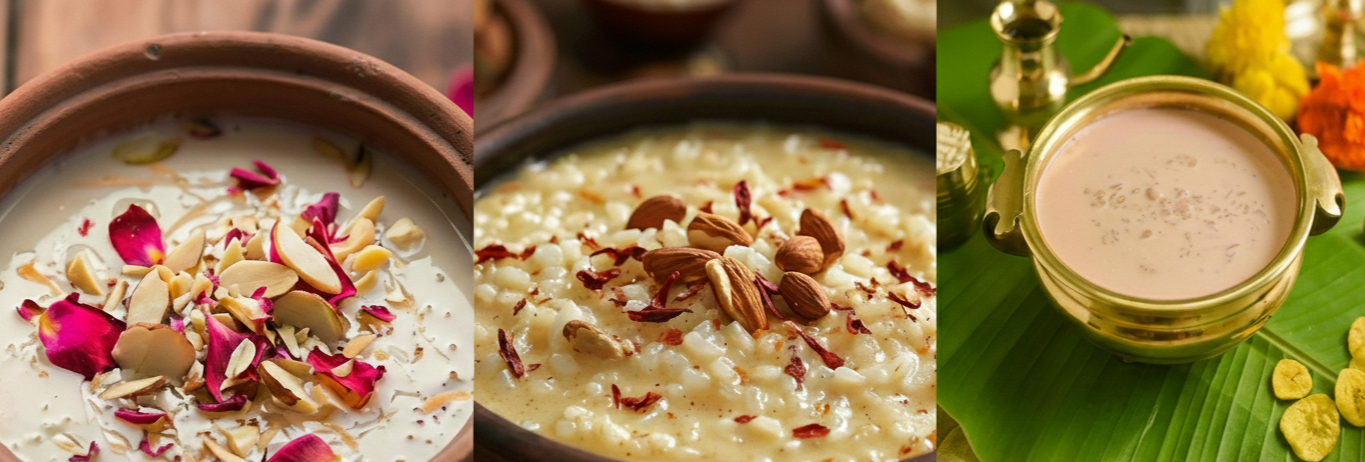
My childhood summers were often filled with the comforting aroma of my grandmother's kitchen. There was always that special bowl of Payasam waiting — warm, sweet, and utterly blissful. For years, payasam was simply the ultimate rice pudding in my world. Then I attended an Onam Sadhya and was served something similar but distinctly different: Pradhaman. That single moment of curiosity sent me looking for the differences between these beloved desserts.
Payasam — Kerala's golden staple
Payasam is the broad category — a sweet, milk-based or coconut milk-based dessert made across Kerala with varying ingredients: rice, vermicelli, lentils, or banana. The base changes; the warmth does not. It is made for festivals, celebrations, and ordinary evenings when sweetness feels necessary. The texture tends to be flowing, pourable, and gentle on the palate.
Pradhaman — the Onam dessert
Pradhaman is a specific, richer subset of payasam made exclusively with coconut milk — no dairy. The most beloved version is Palada Pradhaman, made with rice flakes, coconut milk, and jaggery or sugar. It is thicker than regular payasam and has a more complex, layered sweetness. It is the dessert of the Onam Sadhya, served last, eaten slowly, the final note of a long and deliberate meal.
Kheer and Phirni — the North Indian cousins
Kheer is the pan-Indian version — rice simmered in full-fat milk until it thickens, sweetened with sugar, flavoured with cardamom and saffron. Phirni is its refined Mughal cousin: rice ground to a coarse powder, cooked in milk, set in earthen bowls until it becomes a soft, fragrant pudding eaten cold. They are not the same dish. But they are all the same instinct: sweetness made patient, comfort made deliberate, milk given time to become something more.