It started with a documentary I stumbled across late one evening — someone filming a wedding feast in Kashmir, the camera moving slowly through a courtyard where men were cooking in enormous copper vessels, the kind of scale you only see when a meal is being made for hundreds of people at once.
I didn't know what I was watching. I didn't know it had a name. I didn't know it was considered one of the most complete and ceremonially significant culinary traditions in India. I just watched, and found myself unable to stop watching.
The Discovery
The feast was a Wazwan — Kashmir's grand ceremonial meal, traditionally served at weddings and significant celebrations. It consists of anywhere from 15 to 36 courses, prepared by hereditary specialists called Wazas, and served in a specific sequence that has been refined over centuries. The meal begins with seekh kebabs and moves through ristas, gushtabas, roganjosh, yakhni — each dish arriving at its appointed time, each one part of a larger argument about hospitality and community.
What struck me first was the scale. Then the order. Then, gradually, the understanding that this was not just food — it was a statement about what it means to receive someone as a guest.
What Wazwan Actually Is
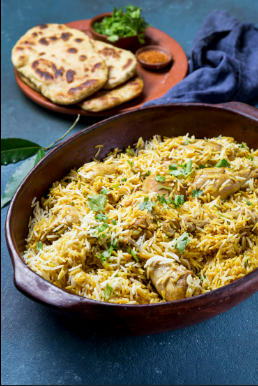
Wazwan is not a menu. It is a ceremony. The meal arrives to groups of four, served in a large copper platter called a traem — piled with rice, surrounded by pieces of meat, with small bowls of yogurt and chutneys arranged around the edges. Four people share one platter. The act of sharing is not incidental — it is structural. The Wazwan is designed to be eaten together.
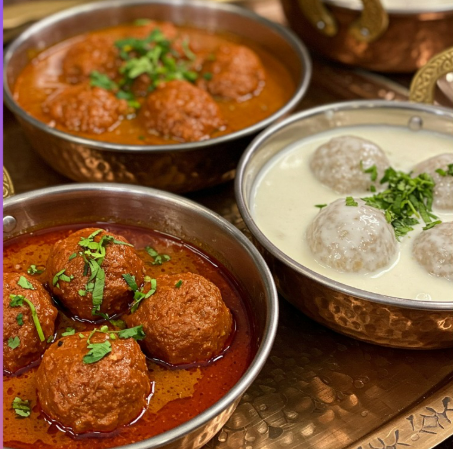
The dishes that follow the traem are brought in courses: seekh kebab first, then methi kebab, then aab gosh, then rista — meatballs in a red, aromatic gravy. Each dish is a variation on the theme of lamb and spice, but each one achieves something entirely different with the same basic ingredients. The restraint of the yakhni against the richness of the korma. The smoky char of the kebab against the silkiness of the gushtaba. The progression is deliberate, considered, and — once you understand it — impossible to experience as anything other than a complete and intentional meal.
The Waza — Masters of the Feast
The Wazas are the hereditary cooks of the Wazwan — families who have passed this knowledge from father to son for generations. The word Waza comes from the Persian word for cook, and the tradition itself reflects the deep Persian influence on Kashmiri cuisine that came through the Silk Road and later through Mughal patronage.
A Waza does not simply cook. He manages a feast — coordinating the timing, the sequence, the quantities, the quality of every dish across hundreds of servings. The preparation begins the night before. The meat is cut, the gravies are started, the kebabs are shaped. By the time guests arrive, the kitchen has already been working for hours. The meal the guests experience as effortless has, behind it, the kind of sustained effort that is itself a form of respect.
What It Means to Eat Together
The thing that stayed with me longest after that documentary was not the food — it was the structure of eating together. Four people, one platter, no individual plates. The meal is designed around the assumption that food is not a private experience. It is something you share, and the sharing is part of what makes it nourishing.
That idea — that a meal is an act of community, not just sustenance — is ancient and widespread, but the Wazwan makes it explicit in a way few other culinary traditions do. The platter is the argument. You cannot eat a Wazwan alone. It would cease to be what it is.
I cooked my first Kashmiri dishes shortly after watching that documentary. They were modest — a rogan josh, a pulao, a phirni. Nothing close to a Wazwan. But they were cooked with a different kind of attention, and served with a different kind of intention. The documentary changed what I was trying to do when I cooked, even if it couldn't change what I was capable of making. That seems like the right kind of influence for a meal to have.