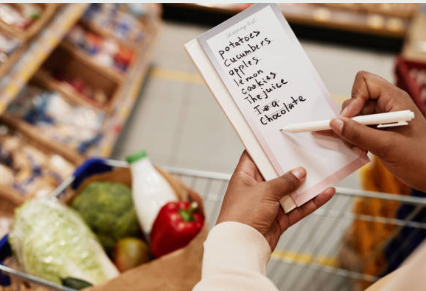
Somewhere in my memory there is a sticky note on a kitchen cupboard. Tea powder, written in pencil. I remember it being there — quietly, faithfully — as a reminder that something was running low and needed to be replaced before it ran out entirely.
The list before the shop
Before every major grocery run, someone in your house makes a mental or physical list. They scan the shelves, check what is nearly empty, estimate what will be needed before the next shop, and factor in what meals are planned. That is demand forecasting. That is procurement planning. Business schools charge good money to teach that exact skill set.
Just-in-time cooking
When you cook a large batch of rice knowing it will serve as the base for three different meals across two days, you are practicing batch production and yield optimisation. When you thaw meat the night before, you are managing lead times. When you use up vegetables that are almost past their best before the fresh ones, you are practicing FIFO — first in, first out — the standard inventory method of every warehouse and every kitchen.
The kitchen as system
The reason this matters is not to make cooking feel more corporate. It is a reminder that the systems we attribute to business — logistics, forecasting, waste reduction — did not originate in offices or textbooks. They originated in kitchens, in fields, in the practical problem of making sure people were fed without waste.
The sticky note was not bureaucracy. It was wisdom. And whoever put it there was doing something human beings have always done: making sure the kitchen kept running.